


A family called the first funeral home that will show up in the result and ask for the water cremation and get the court a price with no context for whether it is high or low. Then they pay it, only to find out we stated at the provider two counties over would have charged $900 less for the exact same service.
The water cremation cost can be different more than almost any other end of life expense and it is calling around without a baseline number is how the families overpaid during and already difficult time.
How Much Does Water Cremation Cost in 2026?
According to pricing data compiled by Memorials.com the national average price of direct cremation in 2026 is around $2500 with the prices that ranges from roughly $1295 in the lowest cost states two $46,000 or even more where the providers are limited.
This is generally $500 to $900 more than direct flame cremation, that usually runs $1,000 to $2,500 depending on your location and the provider.
Full service water cremation packages, which add a viewing, service, and a nicer urn, can push the total to $5,000 or more.
What’s Actually Included in That Price?
Direct water cremation pricing generally covers transportation of the deceased, the aquamation process itself, required permits and paperwork, and return of the remains in a basic container, per pricing breakdowns from FuneralHomeDirectories.com.
What is usually does not include a decorative urn upgrade, a memorial service, obituary publishing or transporting beyond standard local radius. Make sure to ask for the itemized general rep replies list before committing, since all these add-ons are where the quoted price can quietly claim.
Why Does Water Cremation Cost More Than Flame Cremation?
The short answer is equipment and time. An alkaline hydrolysis system costs a funeral home between $180,000 and $270,000 to purchase and install, compared to roughly $130,000 for a standard flame cremation retort, based on figures reported by End of Life Tools.
The process also takes significantly longer and it is generally 4 to 16 hours, compared to 2 to 3 hours for flame cremation which means more staff monitoring time gets built into the price. Fewer providers offer it at all, which reduces local competition and keeps prices higher in areas with limited access.
| Cost Driver | Flame Cremation | Water Cremation (Aquamation) |
| Equipment cost to provider | $130,000 | $180,000–$270,000 |
| Process time | 2–3 hours | 4–16 hours |
| National average price (direct) | $1,000–$2,500 | $2,500 |
| Provider availability | Widely available | Limited, varies heavily by state |
| Energy use | Higher | Roughly 90% lower |

Is Water Cremation Legal Where You Live?
Availability depends entirely on your state, and legal status doesn’t guarantee a nearby provider. As of 2026, alkaline hydrolysis is legal in 26 U.S. states, according to data maintained by the Cremation Association of North America and the National Funeral Directors Association, reported by US Funerals Online.
Some states passed legislation years ago but still have no operating facility, so “legal” and “available near you” are two different questions. Call ahead and confirm an actual operating provider before assuming this option is on the table in your area.
Real-World Example: Two Families, Two Very Different Bills
Consider a family in Missouri arranging direct water cremation for a parent. Because Missouri has multiple providers and lower regulatory overhead, they’re quoted around $1,295 that is barely more than standard flame cremation in the same area.
A family in California facing a similar situation calls three providers and finds quotes closer to $3,900, driven by fewer operating facilities and higher state compliance costs. Same process, same outcome for the family, but a difference of well over $2,000 based entirely on geography.
This is exactly why getting multiple quotes matters more for water cremation than for almost any other funeral expense and the price swing between states is larger than most families expect going in.
geography matters the real-world cost swing

How Does Aquamation Actually Work?
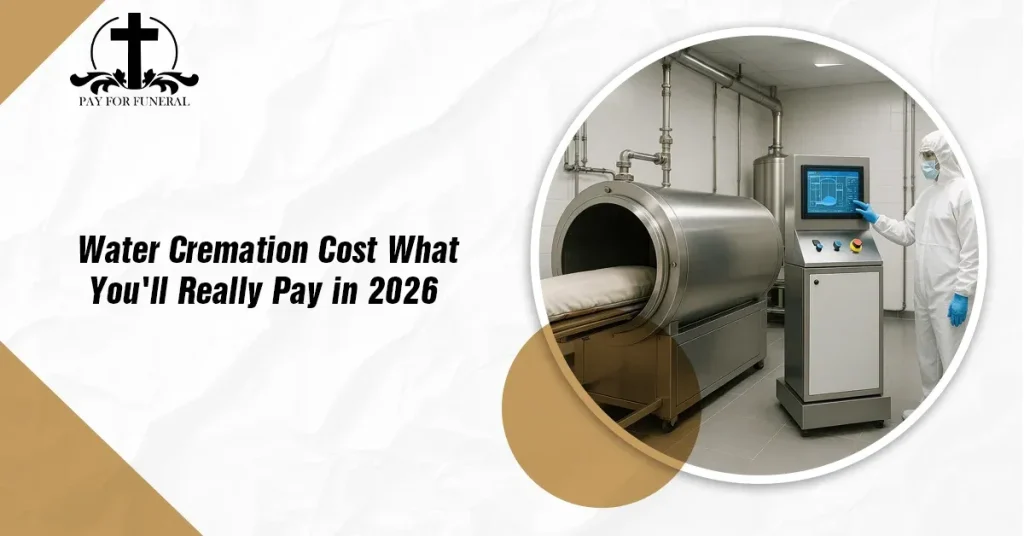
The body is placed in the stainless steel container that is similar in size to a standard cremation retort and any medical devices like the pacemakers are removed before the process starts. The vessel and then filled with a solution of roughly 95% of water and 5% alkali that is generally potassium or sodium hydroxide.
That solution is heated to between 200 and 300 degrees Fahrenheit and gently circulated for several hours, accelerating a process similar to natural decomposition, according to FuneralHomeDirectories.com’s process breakdown. What remains afterward is bone fragment, processed into ash the same way flame-cremated bone is, plus a sterile liquid by-product that’s returned safely to the water treatment system.
Understanding the mechanics matters for cost, since the extended heating and circulation time is a direct driver of the higher price compared to flame cremation’s faster process.

Is the Environmental Benefit Worth the Extra Cost?
For many families, yes and water cremation uses roughly 90% less energy than flame cremation and produces no direct emissions, based on process comparisons from FuneralHomeDirectories.com. If lowering environmental impact is a priority for your family, that reduction is substantial compared to standard flame cremation.
That said, the environmental benefit is a values-based decision, not a financial one. If budget is the primary concern, flame cremation remains the lower-cost option with nearly identical outcomes for the family in terms of remains received and disposition choices afterward.
Water Cremation vs. Flame Cremation: Beyond the Price Tag
Water cremation sits in the middle of the pricing spectrum and more than flame cremation, but still far below traditional burial.
| Option | Typical Cost Range (2026) | What Drives the Price |
| Direct flame cremation | $1,000–$2,500 | Fastest, most widely available |
| Direct water cremation (aquamation) | $1,295–$4,600 | Equipment cost, limited providers |
| Traditional burial with vault | $7,000–$10,000+ | Casket, vault, plot, headstone, service |
Families weighing environmental concerns alongside cost tend to land on water cremation as the middle path and a greener process than flame cremation, without the full expense of traditional burial.

What Do You Actually Get Back After Water Cremation?
You receive cremated remains in a container of your choice, similar to what you’d get from flame cremation. Families typically receive a somewhat larger volume of remains from water cremation, and the ash tends to be finer and whiter in color compared to the grayer remains from flame cremation.
The remains can be kept, scattered, buried, or divided into keepsake urns using the exact same options available with traditional cremation and the disposition choices afterward don’t change based on which process you select.
How to Avoid Overpaying for Water Cremation
Get at least three itemized quotes before choosing a provider, and confirm what’s included versus billed separately as an add-on. Ask specifically whether the quote includes transportation, permits, and the return container, since some providers list a low base price and add these back in later.
Look for providers with Green Burial Council or CANA certification, which signals the facility meets recognized industry standards for the process, per guidance from End of Life Tools. If your state shows aquamation as legal but you can’t find a local operating provider, ask your funeral home whether they partner with an out-of-area facility, since this can add transportation costs you’ll want quoted upfront.
Can You Pre-Plan and Pay for Water Cremation in Advance?
Yes, but only where a provider actually operates, since pre-planning locks in a service that has to be available when it’s needed. Confirm both legal status and an active local provider before signing any pre-need contract, since a state approving aquamation on paper doesn’t guarantee a facility will exist in five or ten years.
Many providers offer payment plans or pre-need trust accounts that lock in today’s price, which can protect against future cost increases as demand for aquamation grows. If you are comparing pre-need options make sure to ask specifically what will happen to your payment if the provider will stop offering the surface before it’s needed and reputable providers will have a clear answer and the fake ones are worth avoiding.
Planning Ahead Makes the Cost Easier to Manage
The water cremation can be a very meaningful, more environmentally conscious choice but the price swing between the providers and the states means that it is paid to compare before you commit. Especially during the time that is already stressful enough.
If covering these costs upfront feels overwhelming, Pay For Funeral helps families understand realistic payment options for funeral and cremation expenses before decisions have to be made under pressure. A short conversation now can prevent a much harder financial surprise later.

Rachel Smith, Funeral Insurance Specialist
Rachel Smith is a dedicated funeral insurance expert at Pay For Funeral, with over 10 years of experience helping families find peace of mind during life’s most sensitive moments. Known for her warm, compassionate approach, Rachel empowers individuals to plan with clarity, dignity, and confidence. She specializes in simplifying funeral insurance, making it approachable, affordable, and tailored to each person’s unique needs. Through every article she writes, Rachel strives to educate, comfort, and guide readers in making thoughtful, informed choices for the future.


